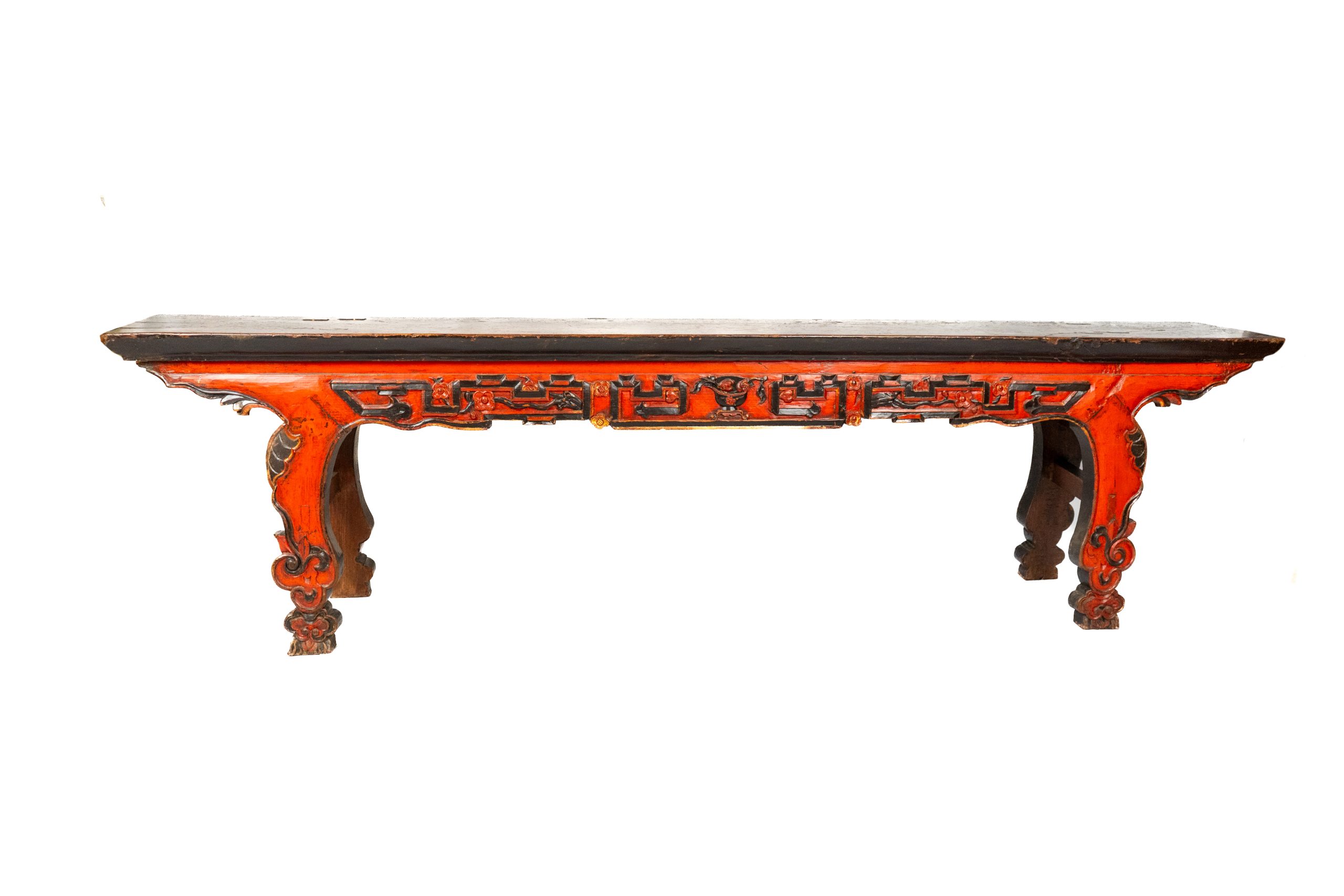
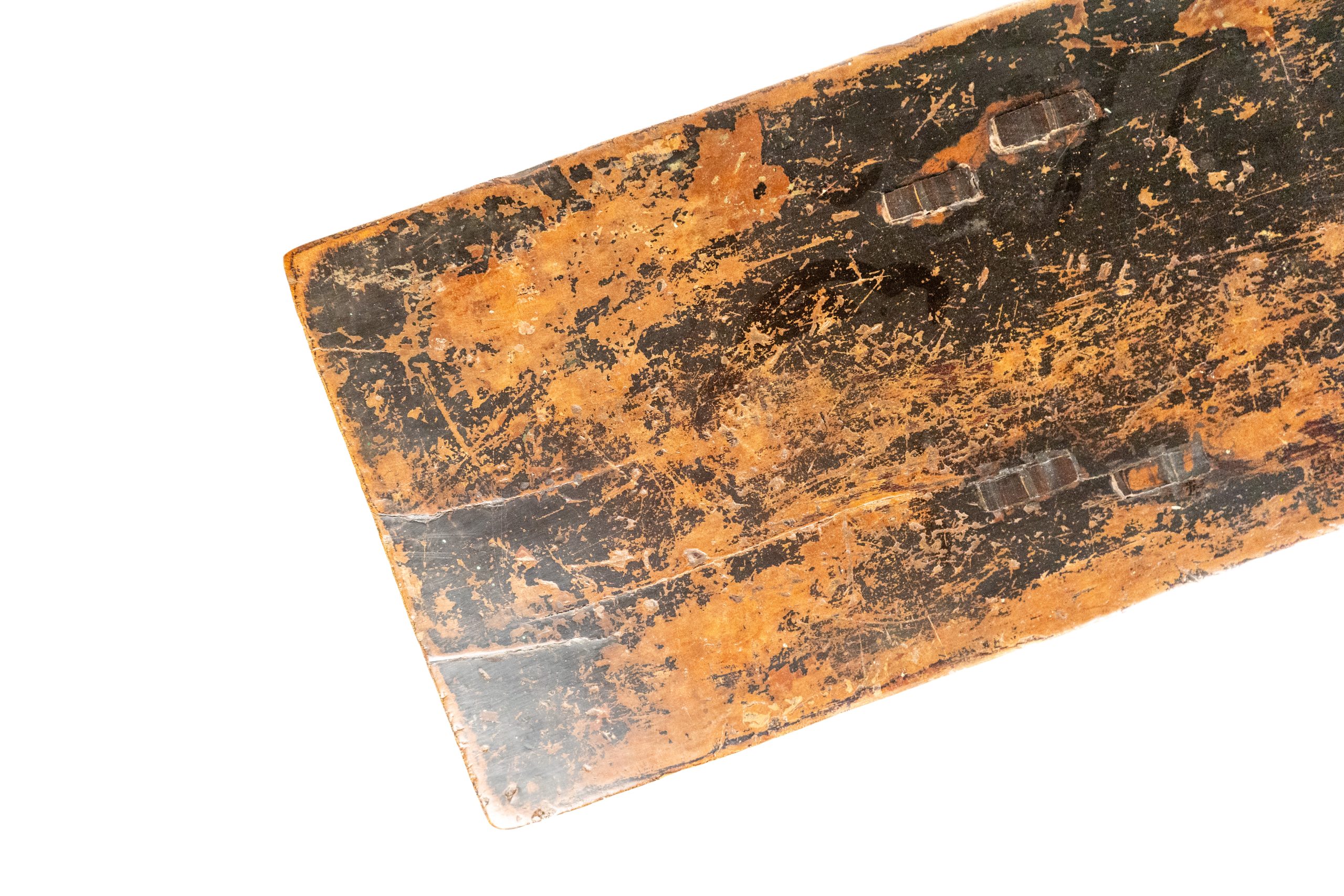
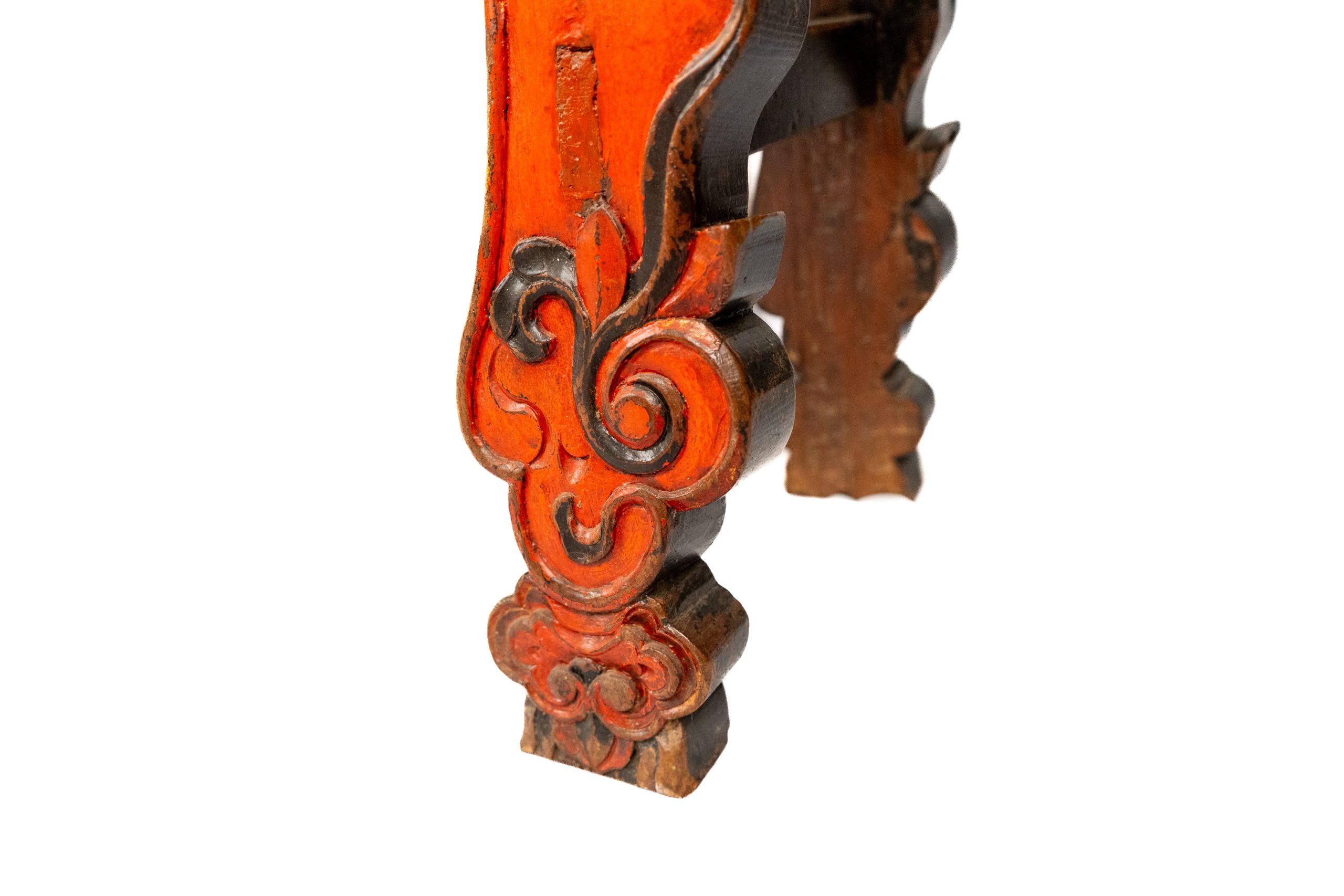
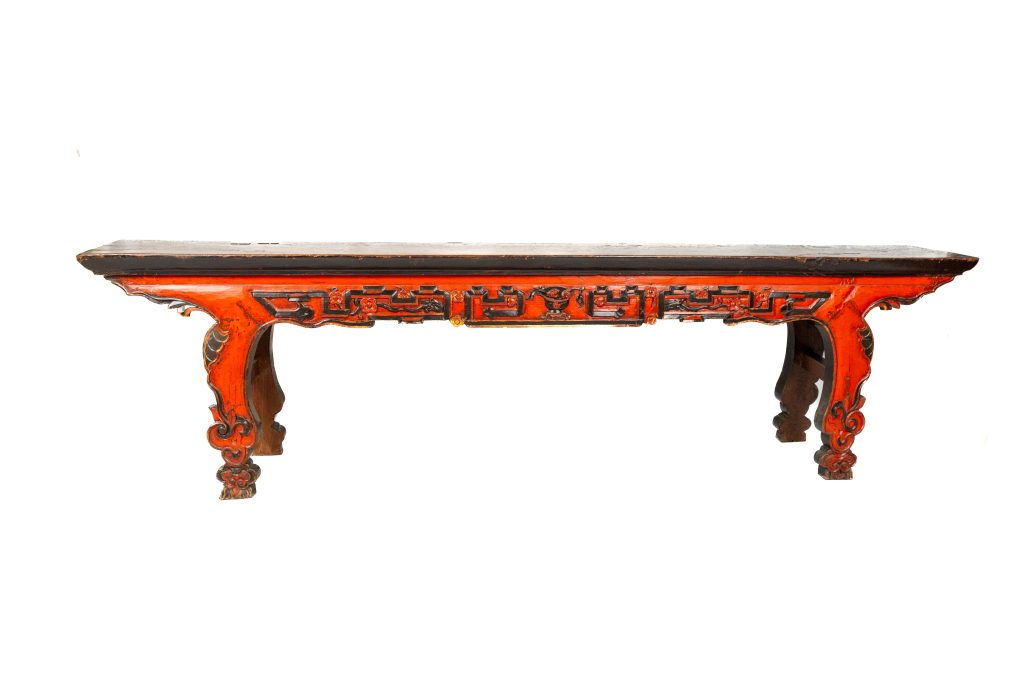
Long and gracefully proportioned, this 19th-century Chinese altar table reflects the understated craftsmanship and decorative vocabulary of late Qing Dynasty furniture. Its aged red-and-black lacquer retains areas of historic wear and faint gilt, while the thick solid-wood top preserves visible mortise-and-tenon joinery and generations of hand-finished character. The carved front apron is especially appealing, combining openwork fretwork with delicate plum blossoms, a traditional symbol of resilience and renewal. Gracefully curved cabriole legs terminate in hand-carved Ruyi-cloud feet, associated with good fortune and blessings. Historic tool marks, exposed wood, lacquer loss, and natural checking throughout give the table an authentic, timeworn presence suited to both traditional and contemporary interiors.