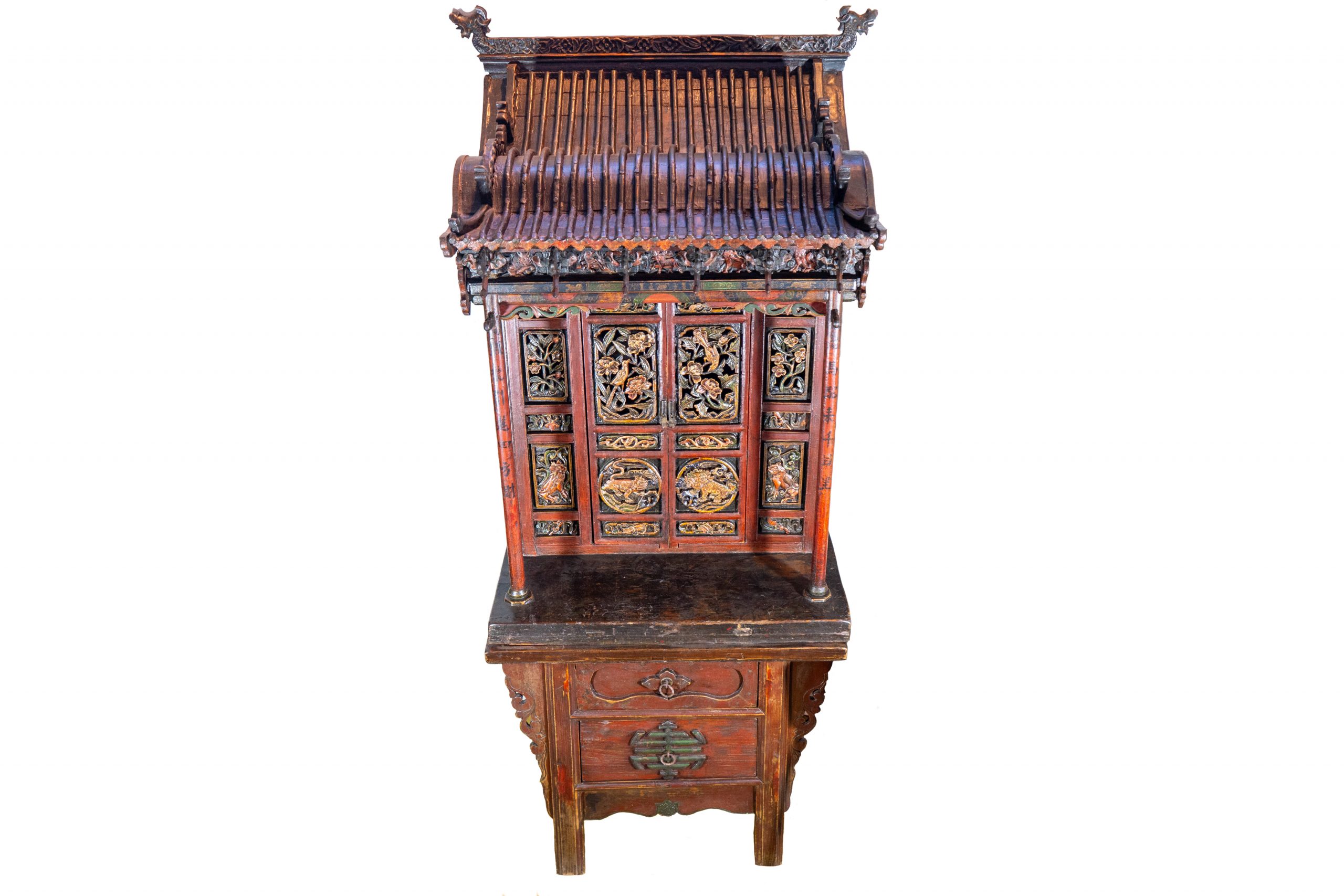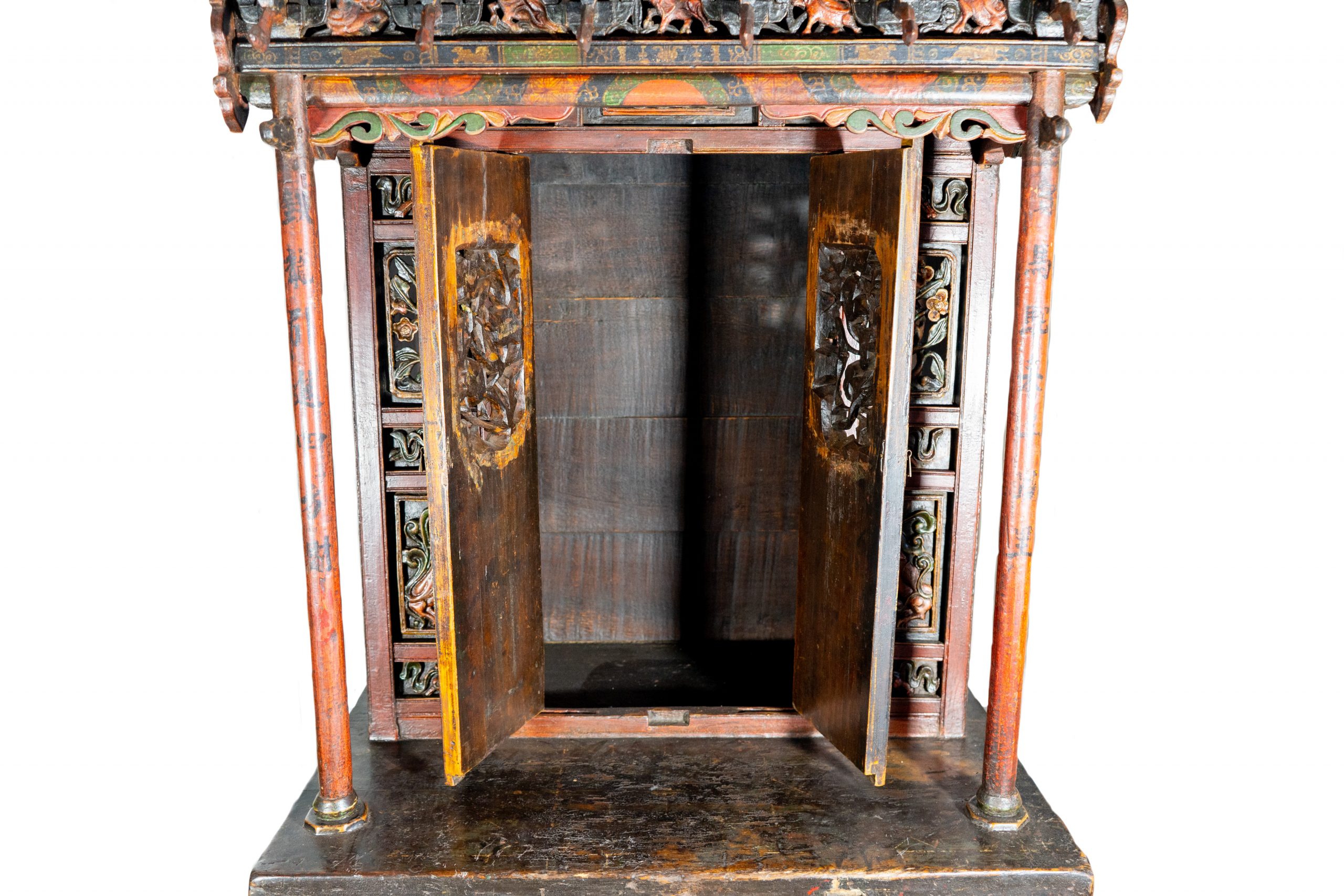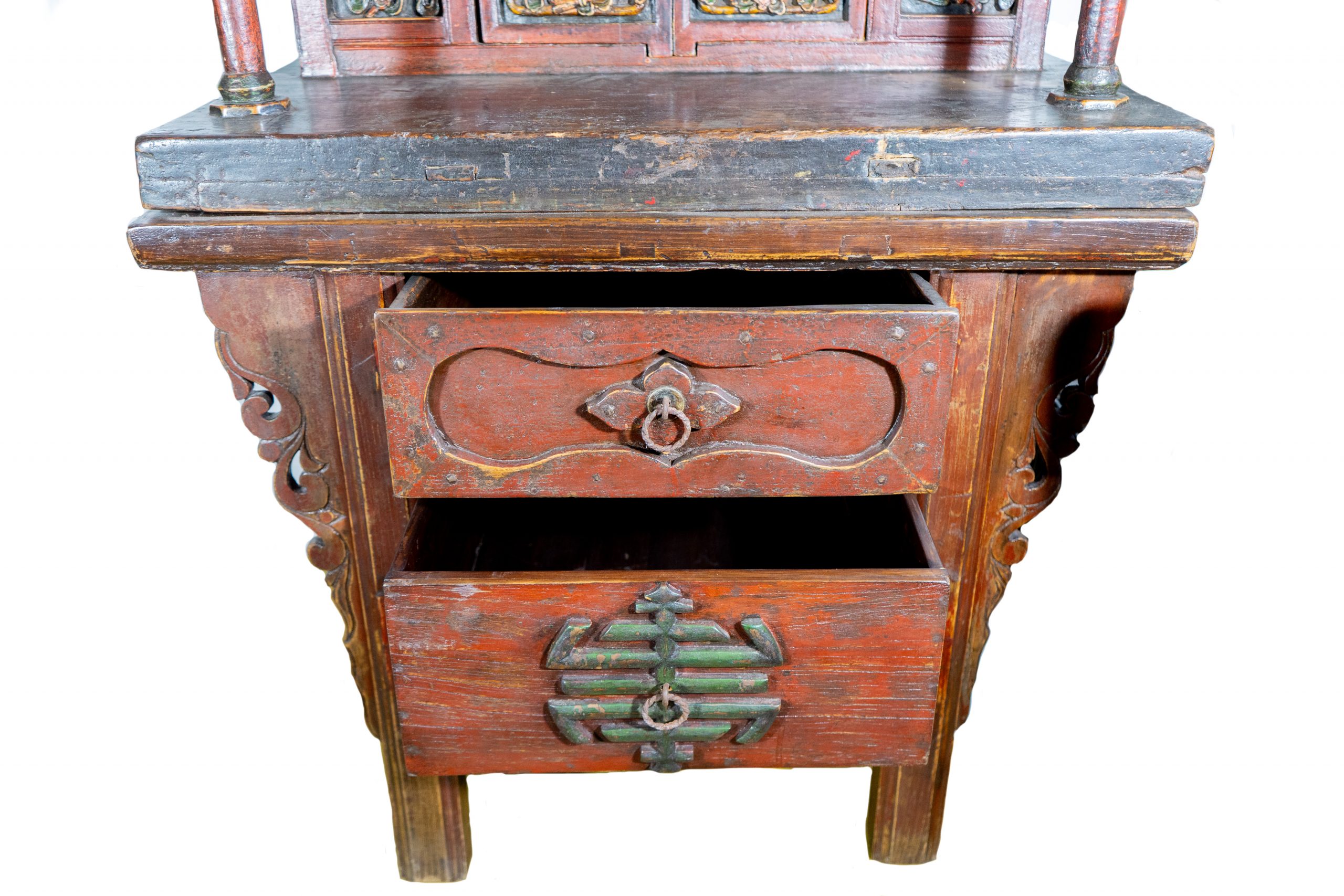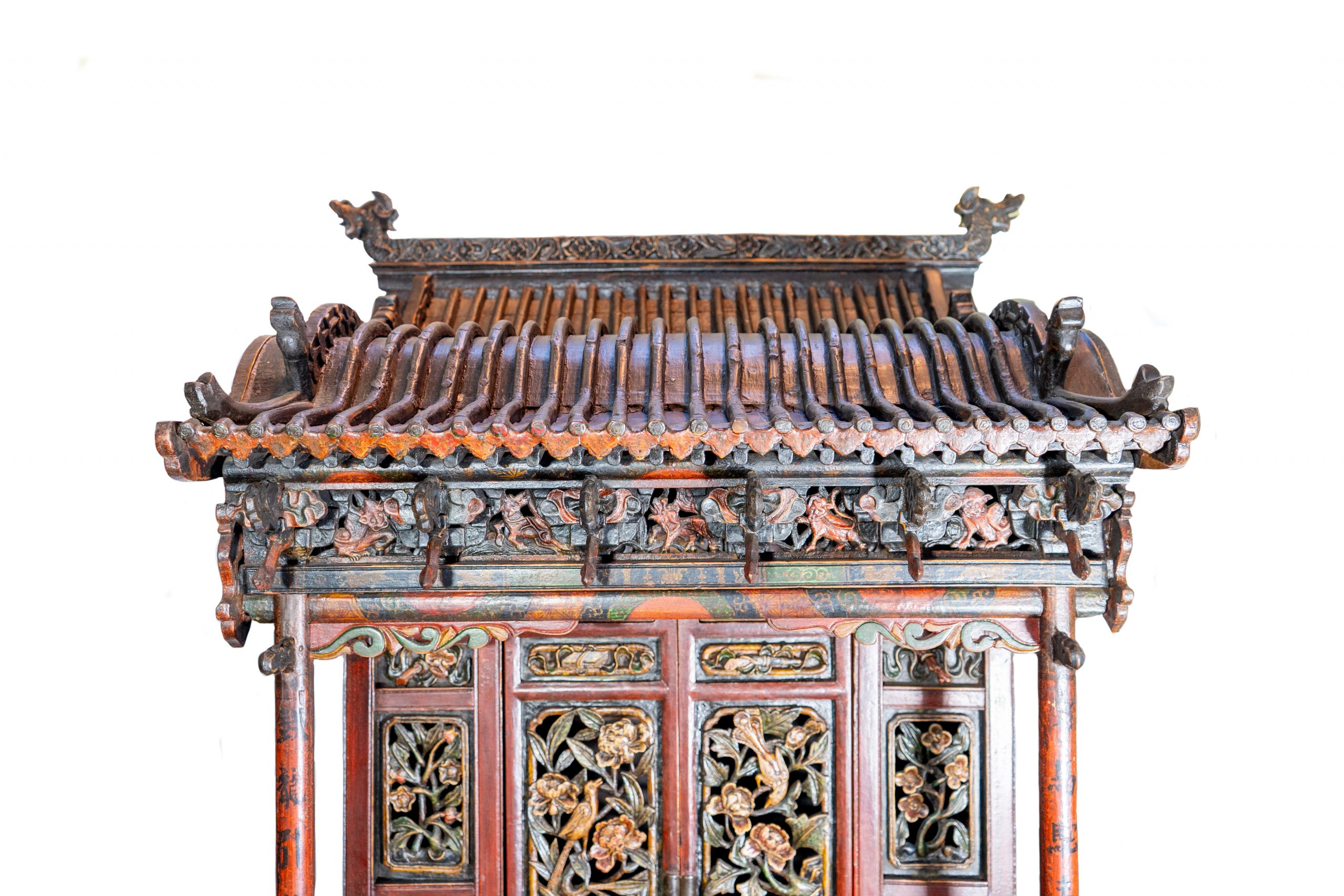
This remarkable 19th-century Chinese household altar shrine, often called a “Buddha House,” is an exceptional example of Qing Dynasty religious furniture inspired by traditional temple architecture. Its tiered pagoda roof, upturned eaves, carved friezes, and richly detailed doors reflect the artistry of Chinese woodcarving, while birds, peonies, the tiger, and the mythical Qilin symbolize prosperity, protection, and good fortune. The original pillar couplets offer blessings for wealth and abundance, proclaiming that the “Money Dragon” brings riches from every direction while a laden horse carries treasures from afar. Below the shrine, two drawers provided storage for incense and ritual objects. Displaying a beautifully aged lacquer patina, this impressive altar stands as both a sacred devotional furnishing and an extraordinary work of Chinese decorative art.
Translation:
Clayton describes this as a Buddha House, or spiritual house—a place created to hold sacred objects and offerings within the home. During the Cultural Revolution, countless pieces of this kind were destroyed, making the ones that survived all the more remarkable. Those fortunate enough to hide them away in quiet places allowed a small part of that heritage to endure. At World Dekor, we’re grateful to have a small collection of these extraordinary survivors, each carrying its own story of faith, craftsmanship, and perseverance.