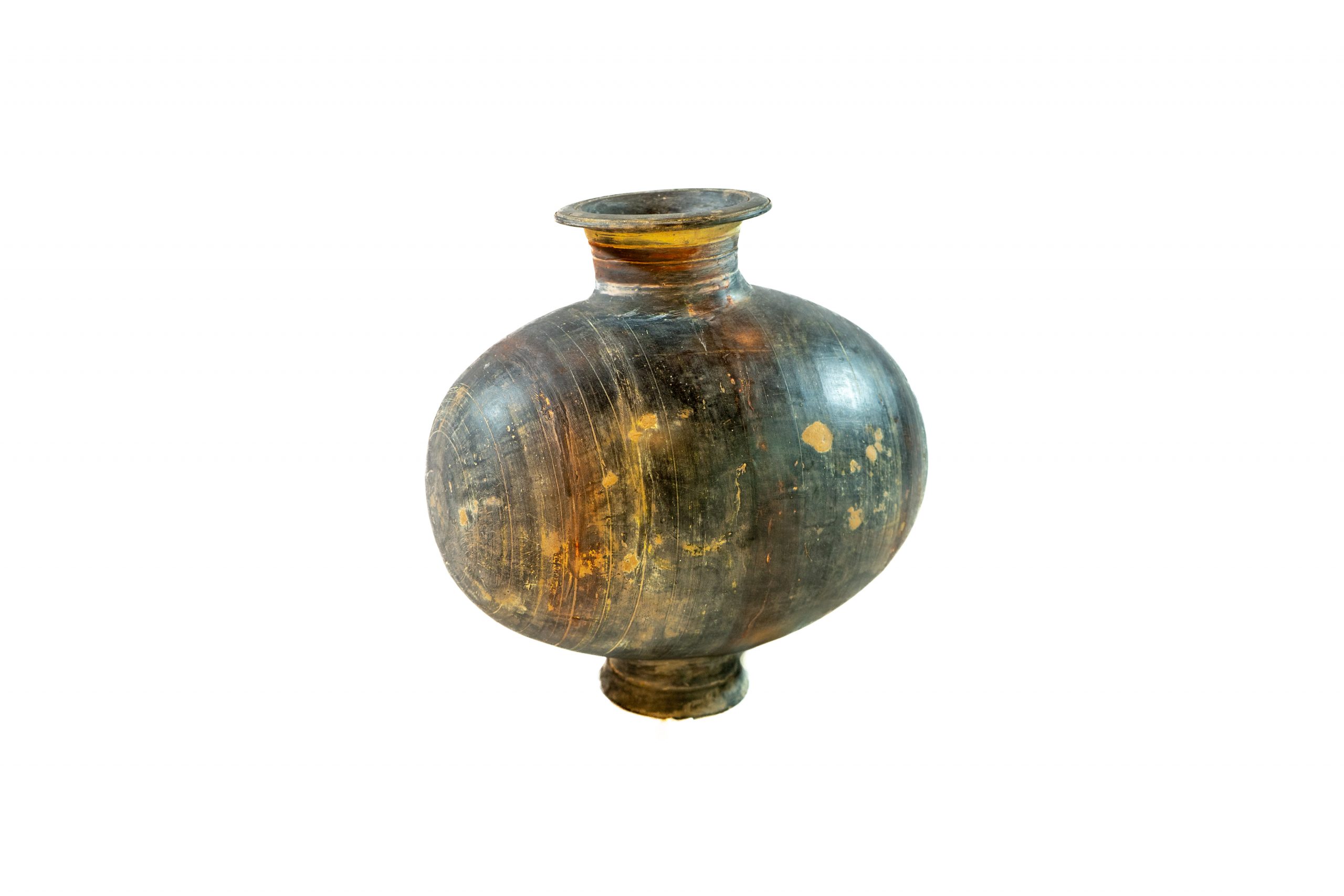
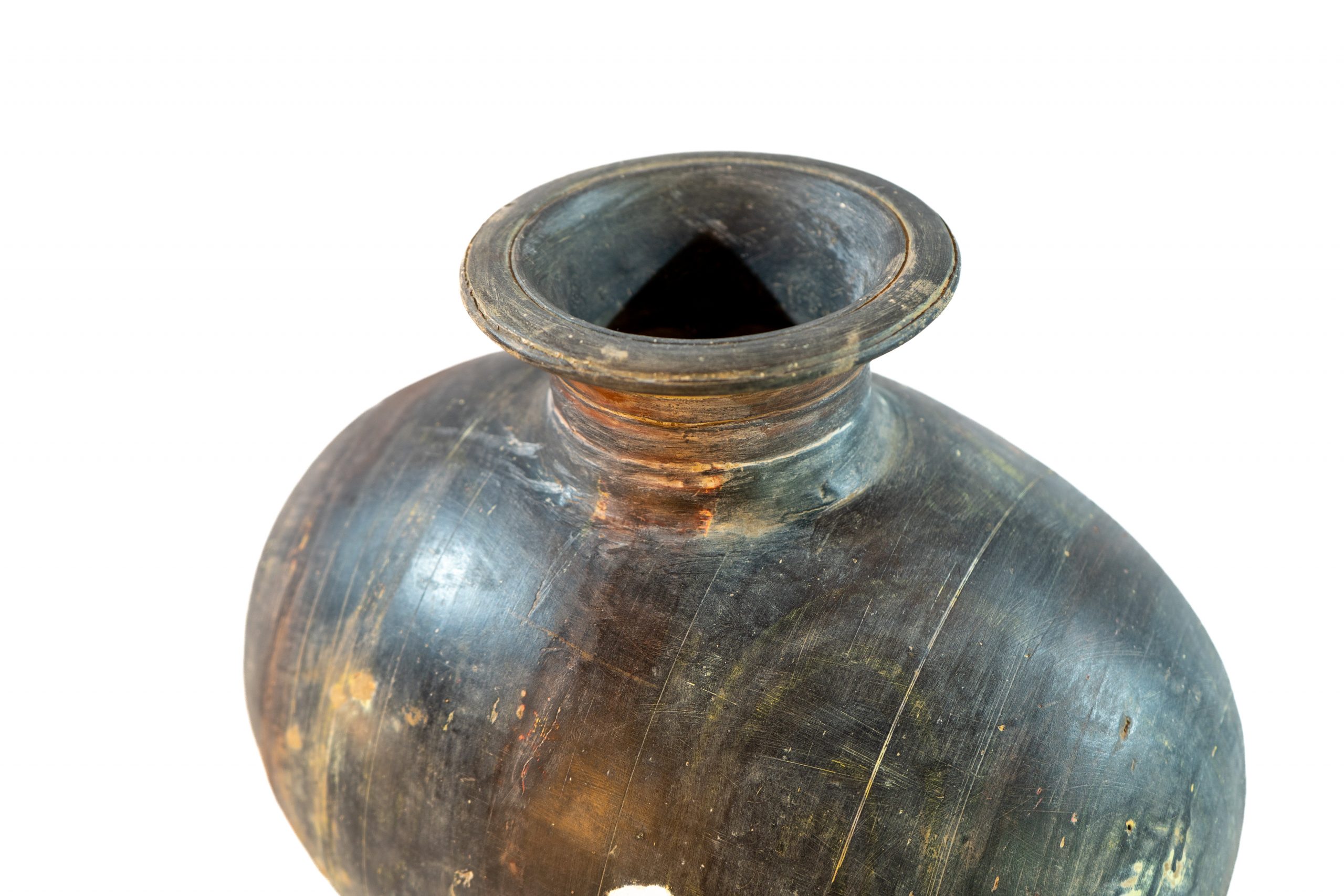
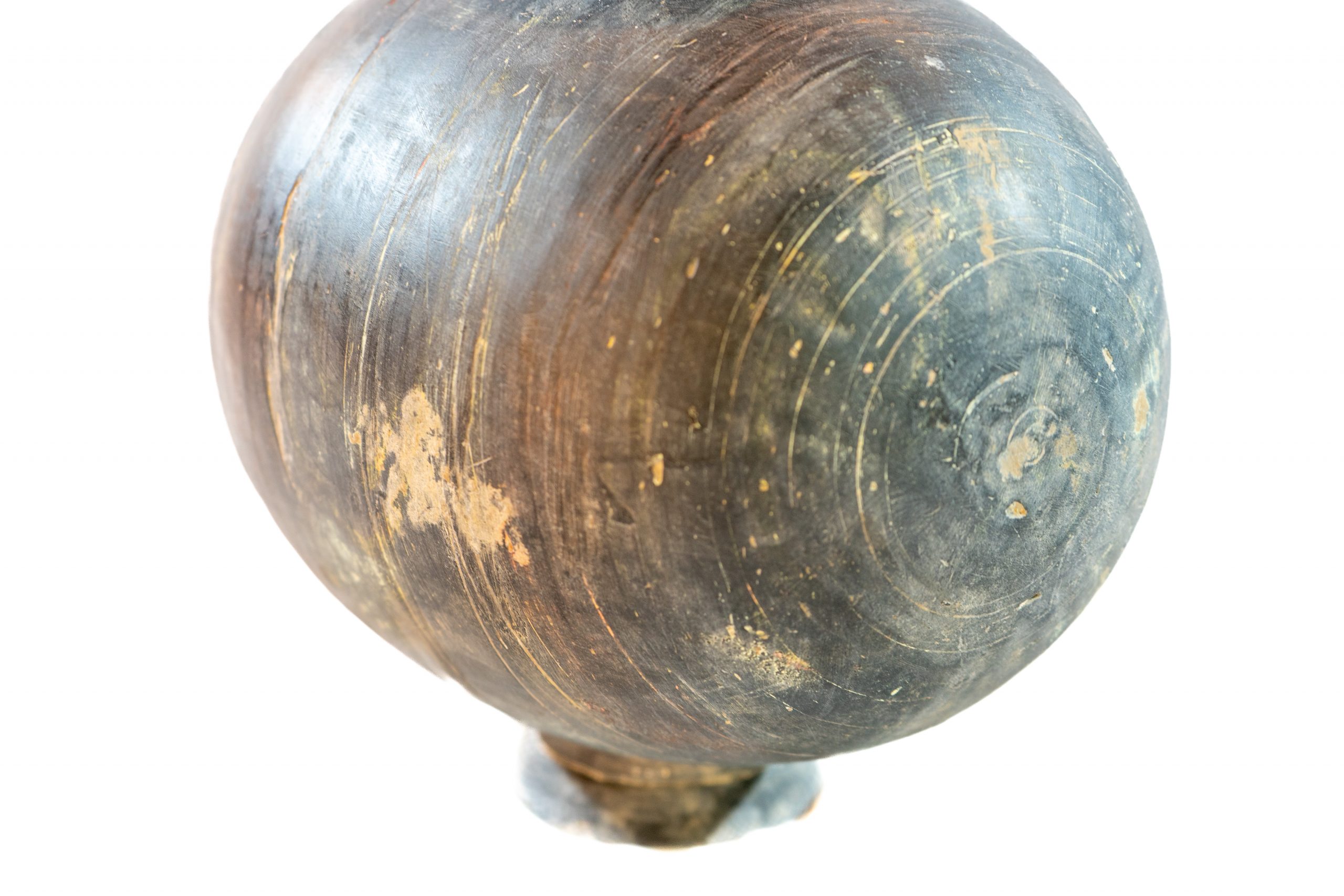
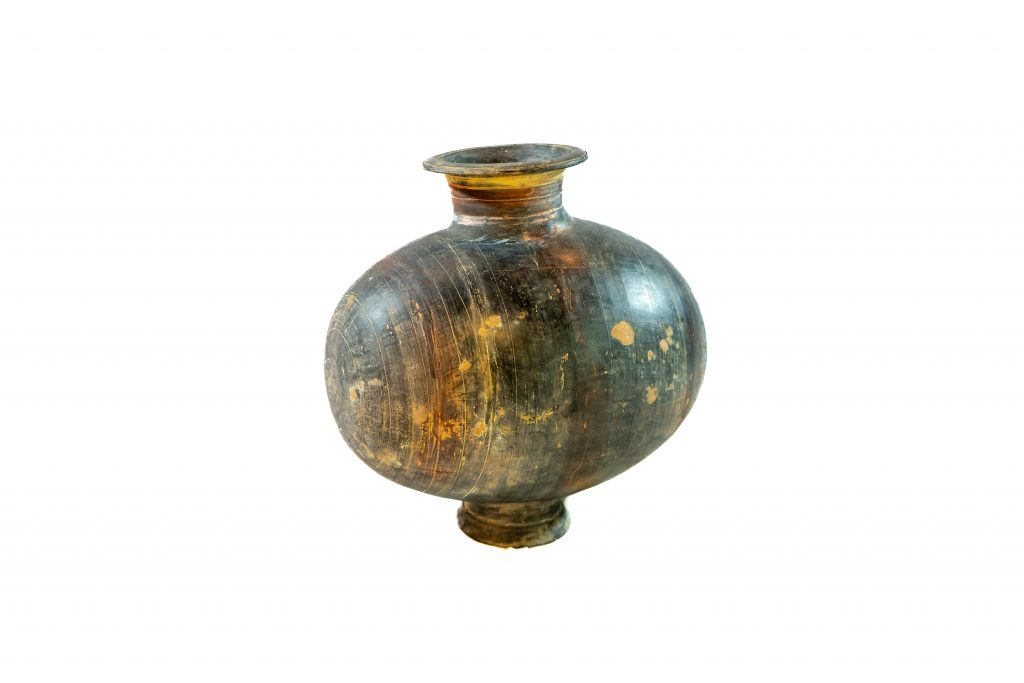
A striking modern tribute to early Chinese ceramic artistry, this vintage studio pottery cocoon jar is crafted in the style of the Western Han Dynasty. Its distinctive elongated, ovoid silhouette—inspired by the ancient silkworm cocoon form—captures the quiet elegance and refined geometry of historic funerary art. The dark, burnished surface is enriched by dramatic concentric throwing rings and a hand-finished patina, offering a rustic yet sculptural aesthetic. Displaying an impressive 14-inch width and an intentional weathered finish from its Shanghai studio origin, this remarkable vessel serves as a commanding statement piece for high-end minimalist, modern, or eclectic interiors.
Provenance
Acquired through Shanghai Guyi Antique Furniture Co., Ltd., Shanghai, China. Provenance is supported by the original company invoice dated March 13, 2004, documenting the item’s age, wood species, place of origin, and purchase information.